Why Is It So Hard to Lose Weight After 40?
- Cheryl Felt
- May 24, 2026
- 10 min read
Weight Loss
Table of Contents
Weight loss after 40 is genuinely harder than it was at 25, and the reason is not lack of willpower or discipline. If you have been eating the same way and exercising just as consistently but watching the scale stay put or climb anyway, your biology has changed in ways that conventional diet advice simply does not account for.
Understanding what is actually happening in your body after 40 is the first step toward doing something that works. Here is the real explanation.
1. Your Metabolism Is Not What It Used to Be
The idea that metabolism slows dramatically with age is partly true, but the full picture is more nuanced than most people realize.
Basal metabolic rate, the number of calories your body burns at rest, does decline with age. Research published in the journal Science found that metabolism remains relatively stable from age 20 to 60, but the key factor is what happens to body composition during those decades. As muscle mass decreases with age, and it does decrease if actively maintained, the calories burned at rest drop because muscle tissue is metabolically active in a way that fat tissue is not.
This creates a slow compound effect. Less muscle means fewer calories burned at rest. Fewer calories burned at rest means the same diet that maintained your weight at 30 now produces a caloric surplus at 42.
The metabolism story is not simply about getting older. It is largely about the muscle mass that age-related hormonal decline quietly erodes over time.
2. Hormonal Changes Drive Most of the Difficulty
This is where the explanation becomes more specific, because the hormonal shifts that happen in your forties are significant and directly affect how your body manages weight.
Declining Estrogen and Progesterone in Women
As women enter perimenopause, estrogen levels begin fluctuating and eventually declining. Estrogen plays a direct role in fat distribution. When estrogen drops, the body tends to shift fat storage from the hips and thighs toward the abdomen. This is why many women in their forties notice abdominal fat accumulating even when their overall weight has not changed dramatically.
Declining progesterone contributes to water retention and bloating, which further changes how weight is experienced and distributed. Disrupted sleep during perimenopause, driven by night sweats and hormonal fluctuations, also raises cortisol levels, which promotes fat storage, particularly in the midsection.
Declining Testosterone in Men and Women
Testosterone declines gradually in men starting around age 30, and more sharply in women during the perimenopausal transition. In both cases, declining testosterone reduces the body’s ability to build and maintain lean muscle mass.
Less muscle means a lower resting metabolic rate, reduced insulin sensitivity, and a greater tendency to store dietary energy as fat rather than use it for muscle repair and energy. The combination of lower testosterone and the loss of muscle it produces is one of the most significant drivers of age-related weight gain.
Insulin Resistance Becomes More Common
Insulin sensitivity, the body’s ability to efficiently use glucose for energy, tends to decrease with age. This is partly hormonal, partly related to muscle loss, and partly the result of years of dietary patterns. As insulin resistance develops, the body needs to produce more insulin to manage blood sugar, and elevated insulin is a potent signal for fat storage.
This is one reason why diets that worked well for weight management in your twenties may produce far less response in your forties. The metabolic context in which those diets operate has fundamentally changed.
Cortisol and Stress Load
Adults in their forties often carry significant life stress, professional, relational, and personal, alongside the biological changes already described. Cortisol, the primary stress hormone, directly promotes abdominal fat storage when chronically elevated. It also stimulates appetite, particularly for calorie-dense foods.
The interaction between cortisol, declining sex hormones, and insulin resistance creates a hormonal environment that actively works against weight loss, even in people who are making genuine dietary and lifestyle efforts.
3. Why Standard Diets Fail More Often After 40
Most conventional diet approaches assume a relatively straightforward relationship between calories consumed and calories burned. That assumption holds reasonably well in a young, hormonally healthy body. In a body navigating hormonal transitions, it breaks down.
Caloric restriction triggers the body’s starvation response, which in a low-testosterone, estrogen-deficient body means the body preferentially breaks down muscle rather than fat for energy. This makes body composition worse rather than better, further reducing metabolic rate, and setting up the cycle of restriction and regain that so many people in midlife experience.
Addressing the root causes, not just the caloric math, is what changes the outcome.
4. What Actually Works for Weight Loss After 40
Approaches that account for the hormonal and metabolic realities of midlife produce meaningfully better results than those that do not.
Strength training is the single most effective lifestyle intervention for preserving and rebuilding muscle mass, improving insulin sensitivity, and raising resting metabolic rate. Aerobic exercise is valuable for cardiovascular health, but resistance training addresses the specific muscle-loss problem that underlies much of the metabolic slowdown of aging.
Protein intake becomes more important, not less, after 40. The body becomes less efficient at using dietary protein for muscle synthesis as testosterone declines, which means adequate and well-timed protein intake is essential for maintaining the muscle that drives metabolic health.
Hormonal evaluation is the step that most conventional weight loss programs skip entirely. If declining estrogen, testosterone, or thyroid function is driving changes in body composition and metabolism, addressing those deficiencies through bioidentical hormone replacement therapy or other hormone therapy can fundamentally change how the body responds to diet and exercise.
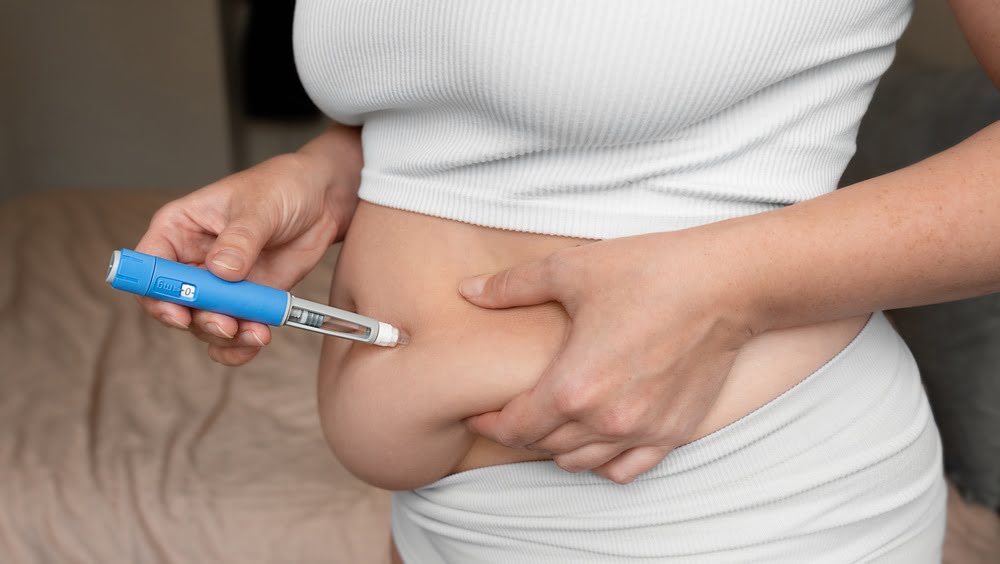
Medically supervised weight loss that accounts for these factors, including the option of GLP-1 medications that improve insulin sensitivity and appetite regulation, gives patients tools that address the biological reality of weight management after 40 rather than ignoring it. Understanding what a medical weight loss program actually involves can help you decide whether this approach fits your situation.
For additional context on how hormone-related metabolic changes affect weight management in midlife, research published by the Endocrine Society outlines the hormonal mechanisms behind obesity and metabolic dysfunction in ways directly relevant to adults in their forties.
5. Frequently Asked Questions
Why do I keep gaining belly fat even though my diet has not changed?
Abdominal fat accumulation after 40 is primarily driven by hormonal changes, particularly declining estrogen in women and testosterone in both men and women, combined with rising insulin resistance. These shifts change where and how your body stores fat, independent of caloric intake. The same diet that maintained your weight at 30 may now produce abdominal fat storage at 45 because the hormonal context in which your body processes food has changed.
Does metabolism really slow down after 40?
Basal metabolic rate itself changes less dramatically than most people assume. The bigger driver of metabolic slowdown is the loss of lean muscle mass that accelerates as testosterone and growth hormone decline after 40. Muscle tissue burns more calories at rest than fat tissue, so as muscle is lost, overall caloric burn decreases even without significant changes in activity level.
Can hormone therapy help with weight loss after 40?
Addressing hormonal deficiencies, particularly through testosterone therapy in men or BHRT in women, can meaningfully improve the body’s ability to maintain and build muscle, improve insulin sensitivity, and support more effective fat metabolism. Hormone therapy is not a standalone weight loss solution, but it changes the metabolic environment in which diet and exercise operate, often producing better results than either approach alone.
Why does strength training matter more for weight loss after 40?
Strength training specifically rebuilds and preserves lean muscle mass, which is the primary driver of resting metabolic rate. After 40, the hormonal environment makes muscle loss more likely without active resistance training. Building muscle raises the number of calories the body burns at rest, improves insulin sensitivity, and changes body composition in a way that cardio exercise alone does not accomplish.
Are GLP-1 medications appropriate for weight management after 40?
GLP-1 medications such as semaglutide and tirzepatide are appropriate for a range of adults experiencing difficulty with weight management, including those in midlife. They work by improving insulin sensitivity, reducing appetite, and slowing gastric emptying, all of which address some of the specific metabolic challenges that develop after 40. Eligibility and appropriateness depend on individual health history and are determined by a qualified provider.
How is medical weight loss different from dieting on my own after 40?
Medical weight loss includes a clinical evaluation of the hormonal and metabolic factors driving your specific weight challenges, access to prescription medications when appropriate, and ongoing professional monitoring to adjust the approach as your body responds. It addresses the root causes of difficulty losing weight after 40 rather than applying a generic caloric framework to a body that has moved well beyond the conditions under which that framework works reliably.
6. Your Body Has Changed — Your Approach Should Too
The frustration of weight loss after 40 is real and justified. The rules that governed your weight in your twenties and thirties have changed, not because of personal failure, but because of genuine biological shifts in hormones, metabolism, and body composition.
Understanding those shifts is the starting point. Addressing them with an approach designed for the body you have now, not the one you had at 25, is what produces results. If you want to understand how medical weight loss and hormone evaluation can work together as part of a plan built around your specific biology, speaking with a qualified provider is the most direct next step available to you.
Key Takeaways
Struggling to lose weight after 40 is not a willpower problem, it is a biology problem, and understanding that distinction changes everything about how you approach it. The hormonal shifts that happen in your forties, declining estrogen, progesterone, and testosterone alongside rising insulin resistance and cortisol, fundamentally alter how your body stores fat, burns calories, and responds to the dietary strategies that worked perfectly in your twenties and thirties. Standard caloric restriction not only fails to account for these changes, it can actively make things worse by triggering starvation responses that prioritize fat storage over muscle. What actually works is an approach built around the biology you have now, one that combines strength training, adequate protein intake, and medically supervised hormonal evaluation to address the root causes rather than just the symptoms. The frustration is real and justified. The path forward is understanding your body as it is today, not as it was at 25.
Your Body Has Changed. Your Approach Should Too.
If you have been doing everything right and still not seeing results, the problem is not your effort. It is that the rules have changed, and your plan has not caught up yet. A medical weight loss and hormone evaluation can help you understand exactly where you stand and build a strategy designed for your biology right now.
Disclaimer: This content is for informational purposes only and does not constitute medical advice. Consult a qualified healthcare provider before beginning any treatment.